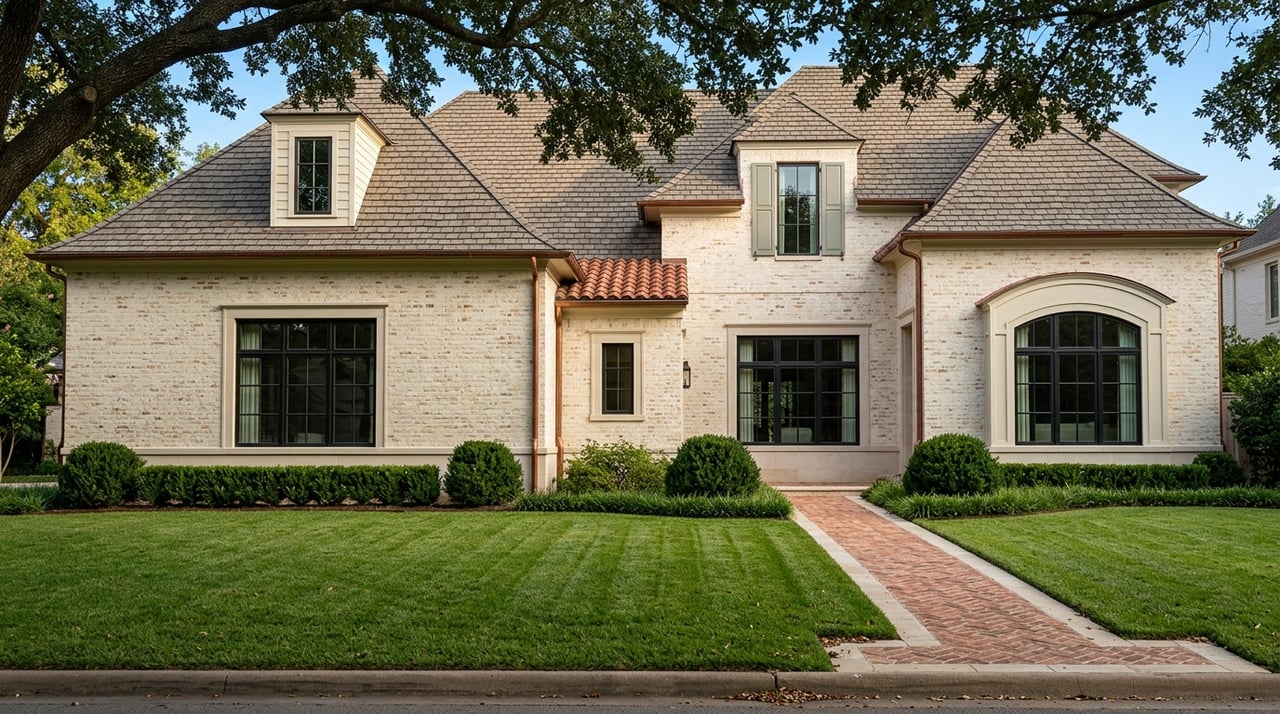
Wondering why one Rivercrest home feels merely expensive while another feels truly irreplaceable? In this part of Fort Worth, architecture does more than shape curb appeal. It helps shape value, buyer demand, and how a property stands apart in a market known for legacy homes and refined custom construction. If you are buying or selling in Rivercrest, understanding that connection can help you make smarter decisions. Let’s dive in.
Rivercrest Has a Layered Architectural Identity
Rivercrest is not a one-style neighborhood. Fort Worth’s preservation plan notes that neighborhoods across the city were built over decades, so their homes usually reflect different periods of construction rather than one uniform design language.
That matters because Rivercrest value is often tied to how well a home represents its era. Instead of comparing homes only by size or finish level, buyers often look at the total package: the architecture, the lot, the setting, and the story the house tells.
Rivercrest also has long-standing prestige. River Crest Country Club describes itself as Fort Worth’s oldest and most storied country club, and its location about five miles from downtown helps explain why the surrounding neighborhood has remained a sought-after address for generations.
Historic records show that River Crest was positioned as a luxury area from the beginning. Historic Fort Worth notes that much of the River Crest Addition developed in the 1920s, and early owners often assembled multiple lots or purchased large parcels along the bluff above the Trinity River.
The Architectural Styles Buyers Notice Most
Mediterranean and Spanish Revival
Mediterranean and Spanish Revival homes are part of Rivercrest’s early luxury identity. Historic examples like the Yarbrough House feature light brick, red-tile roofing, wrought iron details, and villa-like massing.
These features still resonate with buyers because they create a strong visual identity. When a home has this kind of period character and the exterior remains well preserved, it often stands out in a memorable way.
Tudor Revival Homes
Tudor Revival is another style buyers strongly associate with Rivercrest. Historic examples such as the Landreth and Bewley houses show cross gables, half-timbering, slate roofs, and asymmetrical forms.
For many buyers, Tudor homes signal craftsmanship and substance. The visible detail gives the property a sense of permanence, which can support value when the home’s condition and floor plan still work for modern living.
Georgian and Classical Revival
Georgian and Classical Revival homes bring a different type of appeal. The Morgan House and Waggoner-Herbert House are tied to symmetry, pediments, and formal columned entries.
In market terms, these homes often read as estate properties. Their architecture communicates order, scale, and formality, which can make them especially compelling on larger lots or in more prominent settings.
Rare Architectural Blends
Some Rivercrest-area homes stand apart because they do not fit neatly into one category. The Davidson-Haltom House, for example, combines Chateauesque, Norman, and Gothic Revival elements.
That kind of one-off design can create what many buyers think of as collector appeal. In a neighborhood already known for distinctive homes, rare architecture can become a meaningful differentiator when it has been preserved with care.
Newer Custom Luxury Homes
Rivercrest value is not limited to historic or early-period homes. Newer custom homes also command strong prices when they offer the right scale, privacy, and amenity package.
Public record examples help show that range. At 1521 Rivercrest Ct, a 2001 home with 4,116 square feet on 0.32 acre is valued around $1.62 million. At 1608 Rivercrest Ct, a 2005 Tuscan-style home with 7,382 square feet on 0.37 acre is listed at $2.45 million and includes a pool-spa and 4-car garage.
What Architecture Really Means for Value
Lot Size Still Carries Weight
In Rivercrest, the lot is often part of the luxury story. Historic records repeatedly show large or assembled parcels as part of the neighborhood’s original appeal.
That pattern still shows up in today’s market. Current examples range from 0.32 acre at 1521 Rivercrest Ct to 0.59 acre at 212 Hazelwood Dr, while 421 W Hazelwood Dr sits on a 10,324-square-foot lot. A larger or more private parcel does not guarantee the highest price, but it often strengthens value when the house and site feel proportionate.
Put simply, buyers are often paying for setting as much as structure. Privacy, mature placement, and usable outdoor space can make architecture feel more complete.
Renovation Quality Can Lift Value
Older homes in Rivercrest do not need to remain untouched to perform well in the market. In fact, buyers often reward updates that improve everyday function while respecting the original style.
Fort Worth’s historic preservation program notes that exterior work on designated historic properties requires a Certificate of Appropriateness. The city also states that well-maintained historic properties typically have higher home values than non-historic properties.
A useful local example is 421 W Hazelwood Dr. This 1952 home sold on April 15, 2026 for $1.1 million and was described in its listing as having been perfectly remodeled in 2017.
The lesson is clear. Updates tend to add the most value when they improve systems, livability, and finish quality without stripping away the home’s original character.
Provenance Helps a Home Stand Out
In a neighborhood like Rivercrest, a home’s story can matter. Historic records connect River Crest houses to prominent Fort Worth families in banking, oil, livestock, and milling, as well as architects including Clarkson and Gaines, Fooshee and Cheek, Joseph Pelich, and John Staub.
That history does not automatically create a premium. But it can make a property easier to position and easier for buyers to remember, especially when the architecture remains intact.
For sellers, this is an important point. A home with documented provenance and strong architectural integrity often benefits from thoughtful presentation, because the narrative becomes part of the value proposition.
How Buyers Should Evaluate Rivercrest Homes
If you are buying in Rivercrest, square footage alone will not give you the full picture. Two homes can have similar size but very different value depending on lot quality, architectural coherence, renovation choices, and privacy.
As you compare options, it helps to look at a few questions:
- Does the house fit the lot well?
- Has the architecture been preserved or diluted over time?
- Do renovations feel compatible with the home’s original design?
- Is the setting private, usable, and visually balanced?
- Does the home offer a clear identity compared with nearby listings?
A property like 212 Hazelwood Dr helps illustrate this point. Public records show a 1951 home with 6,516 square feet on 0.59 acre, last sold for $2.3 million in 2007 and currently estimated around $2.36 million. That kind of long-term seven-figure positioning suggests how lot size, scale, and estate character can continue to support value.
How Sellers Can Position Architecture as an Asset
If you are selling in Rivercrest, architecture should not be treated as background detail. It should be part of the marketing strategy.
That means showing buyers more than finishes and room count. It means highlighting what makes the property architecturally meaningful, how the lot supports the home, and which updates have improved the property without erasing its identity.
For many Rivercrest sellers, the strongest positioning includes:
- The home’s architectural style and defining features
- Lot size, privacy, and outdoor setting
- Renovation timeline and quality of improvements
- Historical background or notable provenance, when documented
- The way the property fits into the broader Rivercrest market
This kind of story-driven presentation is especially important in a luxury neighborhood where buyers are often comparing homes as complete packages, not just as price-per-square-foot decisions.
Why Rivercrest Rewards Nuance
Rivercrest is a market where details matter. The strongest values usually show up when the house has the right era, the right lot, and improvements that respect the original design.
That is why architecture matters so much here. It is not just visual. It influences emotional appeal, market positioning, and how buyers judge rarity.
Whether you are buying a classic revival home or selling a newer custom property, the goal is the same: understand what makes the home distinct and how that distinction translates into value.
When you want a clear strategy for buying or selling a Rivercrest home, the right guidance can make all the difference. Duwe-Olsen Group offers refined, local expertise for Fort Worth luxury properties, with thoughtful advice tailored to architecture, presentation, and long-term value.
FAQs
How does architecture affect Rivercrest home value?
- In Rivercrest, architecture helps shape buyer demand because it influences character, rarity, and how well a home stands out within the neighborhood’s luxury market.
Do bigger lots always lead to higher prices in Rivercrest?
- Not always, but larger or more private parcels often support stronger value when they improve setting, outdoor usability, and the overall estate feel of the property.
Do renovations increase value in older Rivercrest homes?
- They can, especially when the updates improve function and condition while staying visually compatible with the home’s original design.
Can newer custom homes compete with older Rivercrest estates?
- Yes. Public record examples in River Crest Landing show that newer custom homes can command high prices when they offer strong design, privacy, and amenities.
What should sellers highlight when marketing a Rivercrest home?
- Sellers should emphasize the home’s architectural style, lot quality, renovation history, and any documented provenance that helps distinguish the property.
How can buyers verify Rivercrest property values and ownership records?
- Tarrant County says property ownership, exemptions, and address updates are handled through TAD, which is the best source for tax-record verification.
