As Fort Worth Inc. reported, a wounded Marine sat with a golf club in his hands and told John Simpson something simple: his handicap was 12. That was the whole conversation. Not what happened to his arm, not what he'd lost. Just a number, and a question back.
"My handicap's 12. What's yours?"
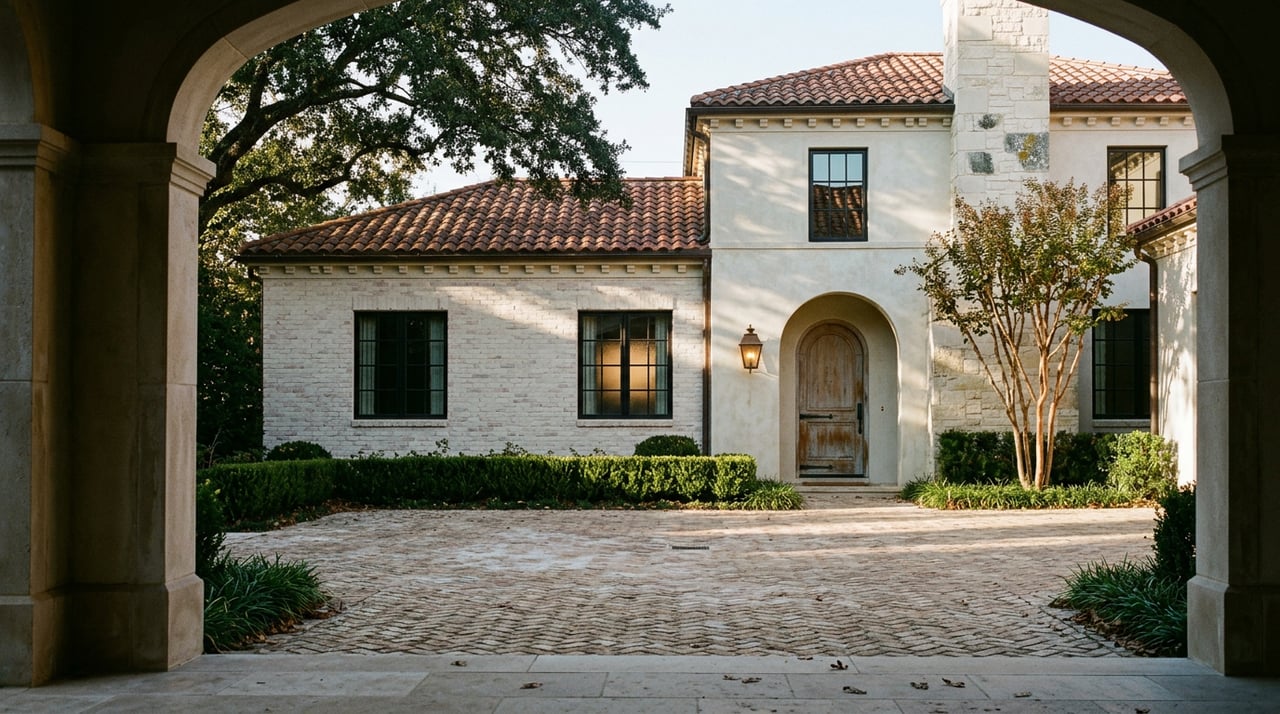
That exchange is the reason the Simpson Cup exists, and this November it lands at Shady Oaks Country Club, the private, no-tee-time club on Roaring Springs Road that most Westover Hills neighbors know as Ben Hogan's home course and little else. For four days, Nov. 1 through 4, that quiet routine changes. Twenty-six wounded American and British service members and veterans will compete in a Ryder Cup-style matchplay competition, and the club that has spent nearly seventy years guarding its privacy is choosing, deliberately, to be visible for it.
A Club Built to Stay Small, Hosting an Event Built to Grow
Shady Oaks was never meant to be a stage. Marvin Leonard, who also built Colonial and Starr Hollow, designed it as a small-membership retreat, a "players club" where quality mattered more than crowds. The Fort Worth Chamber's listing still describes it as a course with no tee times and a deliberately kept-small roster, prized for a "quiet atmosphere reminiscent of an era when courtesy, privacy and dignity were hallmarks of distinction." Ben Hogan was a founding member and, by the club's own account, spent nearly every day he was in town there. It is the kind of place that shows up in golf history books, not in event calendars people circle.
What Shady Oaks has hosted, historically, tells the same story. The Texas Golf Hall of Fame's overview lists the 2008 USGA Senior Amateur, the 2014 TGA Senior Amateur, roughly twenty USGA qualifiers, the Mountain West Women's Championship, and the annual Ben Hogan Junior Cup Matches. These are real, respected events. They are also, almost without exception, amateur competitions and qualifying rounds, the kind of golf that fills a Tuesday field sheet rather than a national broadcast.
The Simpson Cup is a different category of visitor. Now in its 14th year, the event has previously been staged at TPC Sawgrass, Congressional Country Club, Oak Hill, St Andrews Links, Shinnecock Hills, and Royal St George's, according to reporting from the Fort Worth Business Press. Those are six of the most recognizable names in world golf, the rota that hosts Opens and majors. Shady Oaks joining that list, even for one week, is not a small thing for a club that has spent decades being proudly hard to get into.
What Actually Happens Nov. 3 and 4
The format mirrors the Ryder Cup on purpose. Two teams of thirteen, one representing the United States and one representing Great Britain, play fourball and singles matches across the tournament's final two days. The full schedule, as confirmed by team organizers, includes:
- Team USA captained for the first time by Jacob Nelson, a Plano resident and seven-time Simpson Cup competitor, leading a roster looking to reclaim the Cup outright for the first time since 2021
- Team GB captained for the first time by Neil Flynn, also a seven-time veteran of the event
- Returning competitors including two-time former captain Marty Caraway and nine-time veteran Chad Pfeifer
- Matchplay competition on Nov. 3 and 4, following arrival and practice days at the start of the month
None of these names will be familiar to most people driving past the club on their way into the Cultural District. That is, in a sense, the point. The Simpson Cup does not import celebrity. It imports a format built around a specific idea: golf handicaps do not care what happened to your leg.
Why Fort Worth, and Why Now
The timing is not incidental. This year's tournament coincides with the launch of the On Course Foundation's dedicated Texas Chapter, extending the charity's year-round support into a state that is home to more than 400,000 wounded, injured, and sick veterans. John Simpson, the foundation's founder and a former senior vice president at IMG, has described the Shady Oaks booking as another landmark moment for an organization that has spent over a decade proving golf can rebuild what injury takes away.
Read against Shady Oaks' own history, the choice makes a certain sense. This is a club that already treats golf as something closer to a discipline than a hobby, built by a man who bought his land from the Amon Carter Foundation and hired Robert Trent Jones to shape it, kept ever since as a course for people serious about the game rather than people looking for a party. An event whose entire premise is that golf can restore purpose fits the club's own self-understanding more naturally than a corporate outing or a celebrity pro-am ever would.
For neighbors along Roaring Springs Road and throughout Westover Hills, the practical upshot is straightforward. Expect more activity around the club through the first week of November: team logistics, media coverage tied to an international charity event, and a level of outside attention Shady Oaks does not typically invite. The club has not built its reputation on visibility. This week, it is lending some anyway.
The Longer Signal
One tournament does not rewrite a club's character. But a charter chapter does more than a single visit. The Texas Chapter launch means the On Course Foundation is not passing through, it is planting something that outlasts the matchplay bracket, with a stated mission to serve Texas veterans on an ongoing basis. If that commitment holds, Shady Oaks' role this November may turn out to be the first chapter of a longer relationship between one of Fort Worth's most private clubs and a cause it clearly believes in enough to make an exception for.
For residents of Westover Hills, that is worth knowing regardless of whether golf is your sport. The neighborhood's identity has always been tied, in part, to the institutions that sit just outside its gates, quiet, understated, and rarely in the news. This November, one of them is, for a few days, choosing otherwise.
If you're already part of this community, you already know what makes Roaring Springs Road and the Westover Hills area worth paying attention to. If you're thinking about what it would take to call this corner of Fort Worth home, the team at Duwe-Olsen Group would welcome the conversation whenever you're ready to have it.
